
Welding procedures for your next job
Need a written welding procedure or help with an existing one? PWC prepares and qualifies WPS and PQR for jobs Australia-wide. Send us the job requirements so we can discuss the work needed.

What are WPS and PQR?
A Welding Procedure Specification (WPS) sets out how a weld is to be made. A Procedure Qualification Record (PQR) records the test weld used to support that procedure.

WPS vs PQR: how they fit together
| WPS | PQR | |
|---|---|---|
| What it is | The instructions for making the weld | The record of the test weld that proves the instructions work |
| Who uses it | Welders and supervisors on the job | Inspectors, auditors and your customer |
| What it covers | Process, materials, consumables, joint design, positions, preheat, heat input and other settings | The actual settings used on the test weld, plus the test results |
| When it’s made | Drafted before the test (as a preliminary WPS), then issued once qualified | After the test weld has been run and tested |
One PQR can support more than one WPS, as long as each WPS stays inside the range the test qualified.
Do you always need a PQR?
Not always. Some standards let you use a prequalified procedure for common combinations of material, joint and process. AS/NZS 1554.1, for example, allows prequalified procedures for many structural steel joints. If your job falls outside those limits, or your customer asks for a qualified procedure, it needs a test weld and a PQR.
Send us the material grade, thickness, process and the standard your customer named, and we’ll tell you which applies.
Start with the job requirements
Tell us the material, welding process and standard named in your contract. If you already have a procedure, send that too.
Standards we work to
We prepare and qualify procedures to AS 1554, AS 3992, ASME, ISO, AWS and API.
Send the material grade, thickness, welding process and the standard your customer has requested, and we'll confirm what the job needs.
From review to records
We start by reviewing what your job requires. The agreed work may include preparing the procedure, arranging the required testing and completing the records.
1. Review
Review the job and any existing procedure.
2. Agree
Agree on the procedure and testing needed.
3. Complete
Complete the documents included in the quote.
What's included
We review your drawings and job requirements, prepare the draft procedure and agree the test weld needed to support it. The test weld can be run at your workshop or ours.
You receive the completed WPS, the PQR and the supporting test reports. Mechanical testing is carried out by NATA-accredited laboratories, or in-house where a NATA report isn't required. We explain any work or costs that are quoted separately.
What happens to the test weld
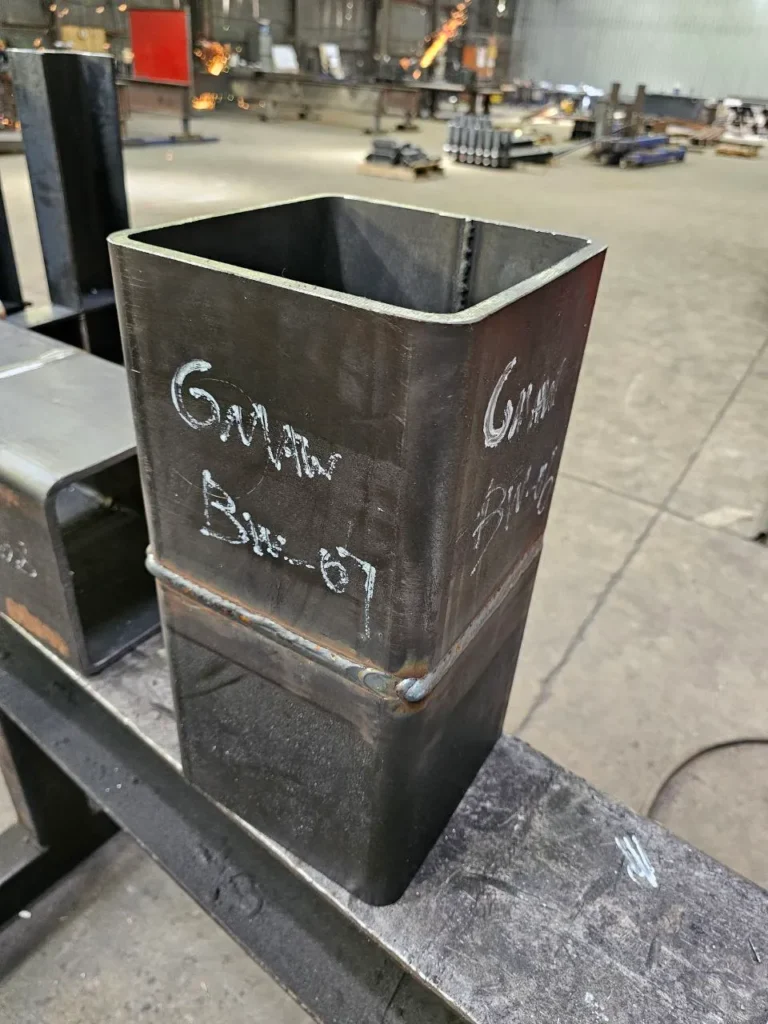
The test weld is run to the draft procedure while the settings are recorded. It is then inspected and tested to the standard. Depending on the standard and the job, this can include visual inspection, NDT, bend tests, tensile tests, macro examination, hardness tests and impact tests.
If the results meet the standard, the PQR is completed and the WPS is issued for use. Mechanical testing is done by NATA-accredited laboratories, or in-house where a NATA report isn’t needed.
Procedures we've prepared
PWC has prepared and qualified welding procedures for NWEC, Karuah, TTM Engineering and Veolia, among others.
Have a procedure already?
Send it with the new job requirements so we can discuss whether a review is needed. Need it by a particular date? Include your deadline so timing can be agreed before work starts.
Common questions
What is a PQR in welding?
A Procedure Qualification Record. It records the settings used on a test weld and the results of testing it. It is the evidence that a welding procedure (WPS) produces sound welds.
What’s the difference between a WPS and a PQR?
A Welding Procedure Specification (WPS) sets out how a weld is to be made. A Procedure Qualification Record (PQR) records the test weld that supports that procedure. Most jobs that need a qualified procedure need both.
Can one PQR support several WPSs?
Yes, as long as each WPS stays within the range the PQR qualified, such as thickness, material group and position.
Which standards do you prepare procedures to?
AS 1554, AS 3992, ASME, ISO, AWS and API. Send the standard your customer has named and we’ll confirm what the job needs.
Where is the test weld done?
At your workshop or at PWC’s own workshop, depending on the job. We agree the location, and who supplies what, before the test.
Who does the mechanical testing?
We work with NATA-accredited laboratories. Where the job doesn’t need a NATA report, we can carry out the testing in-house.
What do I receive at the end?
The completed WPS, the PQR and the supporting test reports. Anything quoted separately is explained upfront.
Can you review a procedure we already have?
Yes. Send it with the new job requirements and we’ll tell you whether it covers the work or needs a new or revised procedure.
Send us your welding requirements
Include the material, welding process, standard, location and date needed. Attach drawings or a customer specification if available.